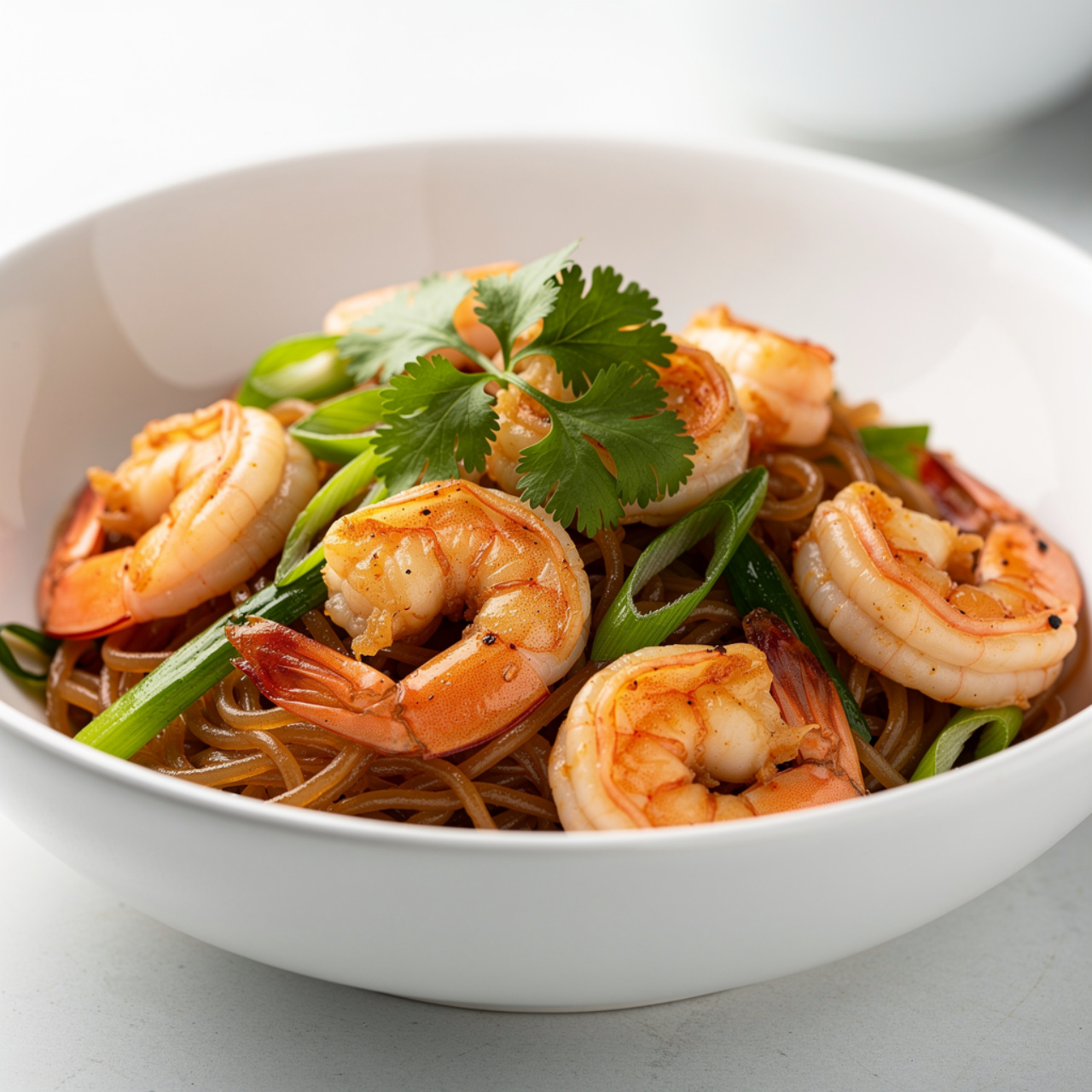
Shrimp Stir Fry with Rice Noodles
This easy shrimp stir fry with rice noodles comes together in under 30 minutes with bold Asian-inspired flavors, crisp vegetables, and naturally gluten-free rice noodles that soak up every drop of savory sauce.

The Weeknight Stir Fry That Actually Tastes Like Takeout
There is something deeply satisfying about pulling off a restaurant-quality dinner on a Tuesday night in under 30 minutes. This shrimp stir fry with rice noodles is exactly that kind of recipe. It has tender, juicy shrimp, crisp colorful vegetables, and silky rice noodles all tossed in a savory, slightly sweet sauce that clings to every strand. Better yet, it is naturally gluten free, making it one of those rare dishes the whole table can enjoy without any modifications.
If you have been searching for easy rice noodle stir fry recipes that do not sacrifice depth of flavor, you have found your new weeknight staple.
Why Rice Noodles Make All the Difference
Not all noodles are created equal in a stir fry. Rice noodles have a delicate, slightly chewy texture that soaks up sauce in a way that wheat-based noodles simply cannot replicate. They are also the key to making this a gluten free rice noodle dish without any compromise in taste or texture.
For this recipe, medium-width rice noodles work best. Thin vermicelli tends to clump, and the extra-wide ones can feel heavy. Look for them in the Asian foods aisle of most grocery stores or at any Asian market.
Chef's Tip: Do not fully cook your rice noodles before they go into the wok. Soak them until just pliable, then let the heat of the pan and the sauce finish the job. This is the single biggest secret to avoiding mushy noodles.
Building the Sauce: The Real Heart of Any Good Stir Fry
A great Asian rice noodle stir fry lives or dies by its sauce. This one strikes the balance between salty, savory, and just a touch of sweetness. Here is what makes it work:
- Tamari (instead of regular soy sauce) keeps the dish completely gluten free while delivering that deep umami backbone
- Oyster sauce adds a rich, slightly caramel-like depth that you cannot fake
- Rice vinegar cuts through the richness with a gentle brightness
- Honey rounds everything out with a subtle sweetness
- Cornstarch helps the sauce thicken and cling to the noodles rather than pooling at the bottom of the wok
Mix your sauce before you start cooking. Stir frying moves fast, and you do not want to be measuring things out while your shrimp are in the pan.
Having the right equipment and quality ingredients really does elevate a dish like this from good to great. A seasoned wok conducts heat evenly and gives you that coveted high-heat sear, while good tamari makes a noticeable difference in the final flavor.
How to Get Perfectly Cooked Shrimp Every Time
Overcooked shrimp is one of the most common stir fry mistakes, and it is easy to avoid once you know what to watch for. Shrimp cook incredibly fast, usually just 1 to 2 minutes per side over high heat.
The visual cue is simple: raw shrimp are grey and translucent. Perfectly cooked shrimp are pink and just opaque. The moment they curl into a loose C shape, they are done. A tight O shape means they have gone too far.
For this recipe, cook the shrimp first, set them aside, and add them back at the very end. This two-step method ensures they stay tender and do not become rubbery from sitting in the hot sauce too long.
Chef's Tip: Pat your shrimp completely dry before they go into the wok. Any surface moisture will cause them to steam instead of sear, and you will miss out on that gorgeous caramelized exterior.
Vegetable Swaps and Variations
One of the best things about this stir fry with rice noodles recipe is how adaptable it is. The broccoli, snap peas, and red bell pepper listed here are a reliable combination, but you can mix and match based on what you have on hand.
Great additions or swaps include:
- Bok choy for a more traditional Asian flavor
- Shredded cabbage for extra crunch
- Mushrooms (shiitake or cremini) for an earthy depth
- Baby corn or water chestnuts for texture variety
- Edamame for a protein boost
For a fully vegetarian version, swap the shrimp for firm tofu and use a gluten free oyster-style mushroom sauce. The result is just as satisfying and still completely gluten free.
Ready to bring this one to the table? Here is the full recipe:
Shrimp Stir Fry with Rice Noodles
This easy shrimp stir fry with rice noodles comes together in under 30 minutes with bold Asian-inspired flavors, crisp vegetables, and naturally gluten-free rice noodles that soak up every drop of savory sauce.
Ingredients
- 8 oz rice noodles, medium width, soaked according to package directions
- 1 lb large shrimp, peeled and deveined, tails on or off
- 1 tbsp sesame oil, toasted, for stir frying
- 2 tbsp vegetable oil, divided
- 4 garlic cloves, minced
- 1 tbsp fresh ginger, peeled and finely grated
- 1 red bell pepper, thinly sliced
- 2 cups broccoli florets, cut into small pieces
- 1 cup snap peas, trimmed
- 3 green onions, sliced, whites and greens separated
- 3 tbsp gluten-free tamari or soy sauce, use tamari to keep the dish gluten free
- 2 tbsp oyster sauce, use gluten-free oyster sauce if needed
- 1 tbsp rice vinegar
- 1 tbsp honey, or maple syrup for a vegan swap
- 1 tsp cornstarch, to thicken the sauce
- 1/2 tsp crushed red pepper flakes, adjust to taste
- 1 tbsp sesame seeds, toasted, for garnish
- 1 fresh lime, cut into wedges for serving
Instruction
Soak the rice noodles in warm water for 8 to 10 minutes until pliable but still slightly firm. Drain and set aside. Do not over-soak or they will turn mushy in the wok.
In a small bowl, whisk together the tamari, oyster sauce, rice vinegar, honey, cornstarch, and red pepper flakes until smooth. Set the sauce aside.
Pat the shrimp dry with paper towels and season lightly with salt and white pepper.
Heat 1 tablespoon of vegetable oil in a large wok or skillet over high heat until shimmering. Add the shrimp in a single layer and cook for 1 to 2 minutes per side until pink and just cooked through. Transfer to a plate and set aside.
Add the remaining 1 tablespoon vegetable oil and the sesame oil to the same wok over high heat. Add the broccoli florets and stir fry for 2 minutes until bright green.
Add the red bell pepper, snap peas, and the white parts of the green onions. Stir fry for another 2 minutes, keeping everything moving so nothing burns.
Add the garlic and ginger and stir fry for 30 seconds until fragrant.
Add the drained rice noodles to the wok and pour the sauce over everything. Toss constantly for 1 to 2 minutes until the noodles are well coated and the sauce has thickened slightly.
Return the cooked shrimp to the wok and toss everything together for another 30 seconds to heat through.
Remove from heat. Serve immediately topped with the green parts of the sliced green onions, toasted sesame seeds, and fresh lime wedges on the side.
Equipment
- Large wok or 12-inch skillet
- Large mixing bowl (for soaking noodles)
- Small bowl and whisk (for sauce)
- Tongs or wooden chopsticks
- Cutting board and sharp knife
- Microplane or fine grater (for ginger)
- Colander or fine mesh strainer
Notes
Serving Suggestions and Storage Tips
This dish is a complete meal on its own, but it pairs beautifully with a simple cucumber salad, steamed edamame, or crispy spring rolls on the side. A squeeze of fresh lime right before serving really wakes everything up and adds a final layer of brightness that makes the whole dish pop.
For storage: Leftovers keep well in an airtight container in the refrigerator for up to 3 days. Reheat in a hot skillet with a splash of water or broth rather than the microwave to keep the shrimp tender and the noodles from clumping.
Whether you are cooking for a busy weeknight or meal prepping for the week ahead, this easy rice noodle stir fry delivers big on flavor without the fuss. Once you make it once, it will earn a permanent spot in your dinner rotation.