Homemade Chicken Broth Recipe (Rich, Wholesome, and Full of Flavor)
This rich homemade chicken broth is slow-simmered with fresh vegetables and herbs for a deeply nourishing base that elevates every soup, stew, and sauce it touches.

The Broth That Makes Everything Better
There is something almost magical about a pot of homemade chicken broth slowly simmering on the stove. The whole kitchen fills with that deep, savory aroma that smells like comfort itself. Whether you are making a healthy chicken soup for dinner, looking for a nourishing homemade chicken and vegetable soup base, or simply want something wholesome to sip on a cold afternoon, this recipe delivers every single time.
This is not the flat, salty liquid from a cardboard box. This is real, golden, gelatin-rich broth built from bones, fresh vegetables, and herbs that have had time to give everything they have got. Once you make it from scratch, going back is almost impossible.
Why Homemade Broth Is Worth Every Minute
Store-bought broth gets the job done in a pinch, but it simply cannot replicate the body and depth you get from long-simmered bones. When collagen breaks down slowly over a few hours, it transforms into gelatin, which gives homemade broth that slightly silky texture and rich mouthfeel. When refrigerated, a great homemade broth should actually gel and wobble like loose jello. That is your sign you did it right.
Beyond flavor, this recipe is also genuinely nourishing. It fits perfectly into any plan for healthy chicken detox soup, and it is the backbone of the best chicken detox soup you will ever make at home. Bone broth enthusiasts have long celebrated its gut-supportive properties, and while we are recipe developers rather than nutritionists, we can say with confidence that a bowl of this does feel restorative in the best way.
Chef's Tip: The secret weapon in this recipe is a splash of apple cider vinegar added before heating. It helps draw minerals and collagen from the bones during the long simmer, giving your broth more body and nutritional depth. You will not taste it at all in the finished broth.
The Ingredients That Make the Difference
This recipe is built on humble, affordable ingredients. Chicken backs, necks, and carcasses are often the cheapest cuts at the butcher counter, and they yield the most collagen-rich broth of all. If you roast a whole chicken for dinner, save that carcass in the freezer until you have enough to make a batch.
For vegetables, the classic French mirepoix of carrots, celery, and onion forms the aromatic base. Leave the skins on for color and extra flavor. A handful of garlic cloves, some fresh thyme, flat-leaf parsley, bay leaves, and whole black peppercorns round out the profile beautifully. It is a healthy chicken soup with herbs that perfumes your whole house while it cooks.
Using good-quality, filtered water makes a noticeable difference in the final clarity and taste of your broth. The same goes for fresh herbs over dried whenever possible.
Having the right equipment, from a large heavy-bottomed stockpot to a fine-mesh strainer and proper airtight storage jars, makes the whole process smoother and your results more consistent.
How to Simmer the Perfect Chicken Broth
The most important rule in this recipe is patience. Low and slow wins every time. A hard rolling boil makes cloudy, bitter broth. A lazy, barely-there simmer with just a few bubbles winking at the surface gives you that clear, golden, deeply flavored liquid.
Start with cold water, not hot. Beginning with cold water allows the proteins to release gradually, which keeps the broth cleaner. As it comes to temperature, you will see gray foam rise to the surface. Skim it off diligently in the first 20 minutes. After that, the broth largely takes care of itself.
Three hours is the minimum for a flavorful result. Four hours is even better. Some cooks go six hours or longer, though the improvement becomes more subtle after the four-hour mark for a standard chicken broth.
Chef's Tip: If your broth is tasting a little thin or flat after straining, simply return it to the pot and simmer it uncovered for another 20 to 30 minutes. Reducing it concentrates all those flavors beautifully and gives you a richer, more intense base.
From Broth to a Full Wholesome Chicken Soup
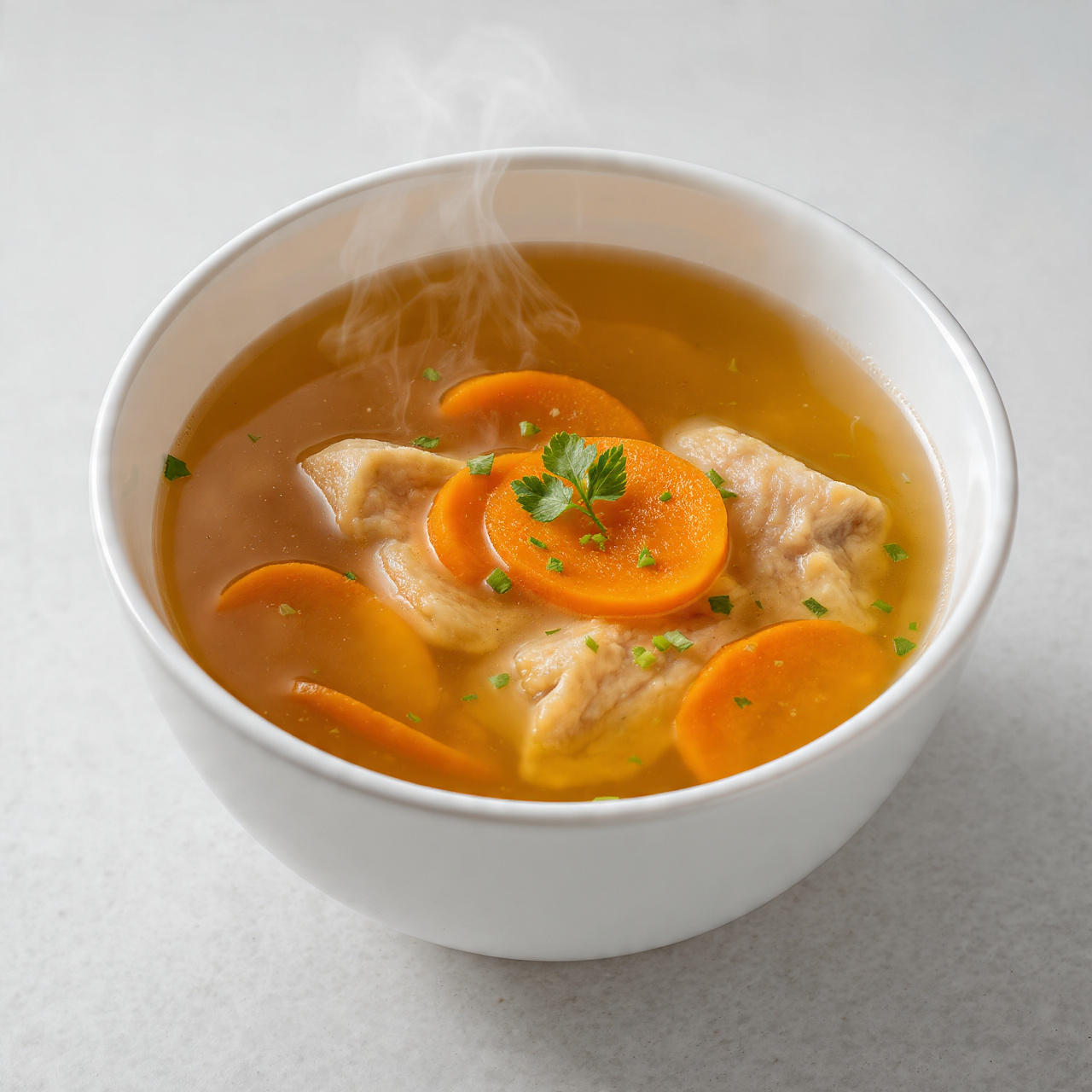
Once you have your broth ready, the possibilities are almost endless. For a wholesome chicken soup that works as a complete healthy chicken soup for dinner, simply add shredded poached chicken directly to the hot broth along with cooked egg noodles, rice, or farro. Throw in some sliced carrots and celery cooked until just tender, and finish with a handful of fresh parsley. That is your classic homemade chicken and vegetable soup in under 30 minutes.
For a lighter, more detox-forward bowl, skip the noodles and load up on vegetables including zucchini, spinach, kale, and thinly sliced ginger. Add a squeeze of lemon right before serving. This approach works beautifully as a healthy chicken detox soup that feels restorative without being heavy.
Ready to make your own batch? Here is everything you need:
Homemade Chicken Broth Recipe (Rich, Wholesome, and Full of Flavor)
This rich homemade chicken broth is slow-simmered with fresh vegetables and herbs for a deeply nourishing base that elevates every soup, stew, and sauce it touches.
Ingredients
- 3 lb chicken carcass or bone-in chicken pieces, backs, necks, or a whole carcass work great
- 3 carrots, roughly chopped, unpeeled
- 3 celery stalks, roughly chopped, leaves included
- 1 yellow onion, halved, skin on for color
- 5 garlic cloves, smashed, unpeeled
- 1/2 cup fresh flat-leaf parsley, stems and leaves both welcome
- 4 fresh thyme sprigs, or 0.5 tsp dried thyme
- 2 bay leaves, dried
- 1 tsp whole black peppercorns
- 2 tbsp apple cider vinegar, helps draw minerals from the bones
- 12 cups cold water, enough to fully submerge everything
- 1 tsp kosher salt, add more to taste after straining
Instruction
Place the chicken bones or pieces into a large stockpot. Add the carrots, celery, onion, garlic, parsley, thyme, bay leaves, peppercorns, and apple cider vinegar.
Pour in the cold water, making sure everything is fully submerged. Let the pot sit for 15 minutes before heating. This rest time with the vinegar helps begin drawing collagen and minerals from the bones.
Bring the pot to a gentle boil over medium-high heat. As it heats up, use a large spoon or ladle to skim off any gray foam that rises to the surface. This keeps your broth clear and clean-tasting.
Once the broth reaches a boil and foam has been skimmed, reduce the heat to low. You want a very gentle, lazy simmer with just a few bubbles breaking the surface. Cover partially with a lid.
Simmer for at least 3 hours, or up to 4 hours for a richer, deeper flavor. Avoid boiling vigorously, as this makes the broth cloudy and can turn the fat bitter.
Remove the pot from heat and allow it to cool for 20 to 30 minutes. Using tongs or a slotted spoon, remove the large bones and vegetables and discard them.
Set a fine-mesh strainer over a large bowl or second pot. Ladle the broth through the strainer, discarding all solids. For extra clarity, line the strainer with a layer of cheesecloth.
Taste the broth and season with kosher salt as needed. If you prefer a more concentrated flavor, return the strained broth to the pot and simmer uncovered for another 20 to 30 minutes.
Let the broth cool completely at room temperature, then transfer to airtight containers or jars. Refrigerate overnight. The next day, skim off the solidified fat layer on top, or leave it for added richness.
Use immediately, refrigerate for up to 5 days, or freeze in 1-cup or 2-cup portions for up to 6 months.
Equipment
- Large stockpot (8 to 12 quart)
- Fine-mesh strainer
- Cheesecloth (optional, for extra clarity)
- Large bowl or second pot for straining
- Ladle
- Airtight glass jars or freezer-safe containers
- Tongs or slotted spoon
Notes
Storing and Using Your Homemade Broth
Once your broth is strained and cooled, transfer it to glass mason jars or airtight containers. It keeps beautifully in the refrigerator for up to five days, and in the freezer for up to six months.
For easy portioning, freeze broth in ice cube trays first, then pop the frozen cubes into a labeled zip-lock bag. Each cube is roughly 2 tablespoons, which is ideal for deglazing pans, enriching sauces, or adding a small boost of flavor to grains and vegetables as they cook.
This is truly one of those foundational recipes that rewards you over and over again. Make a big batch on a Sunday afternoon, stock your freezer, and you will have liquid gold on hand every time a recipe calls for it.