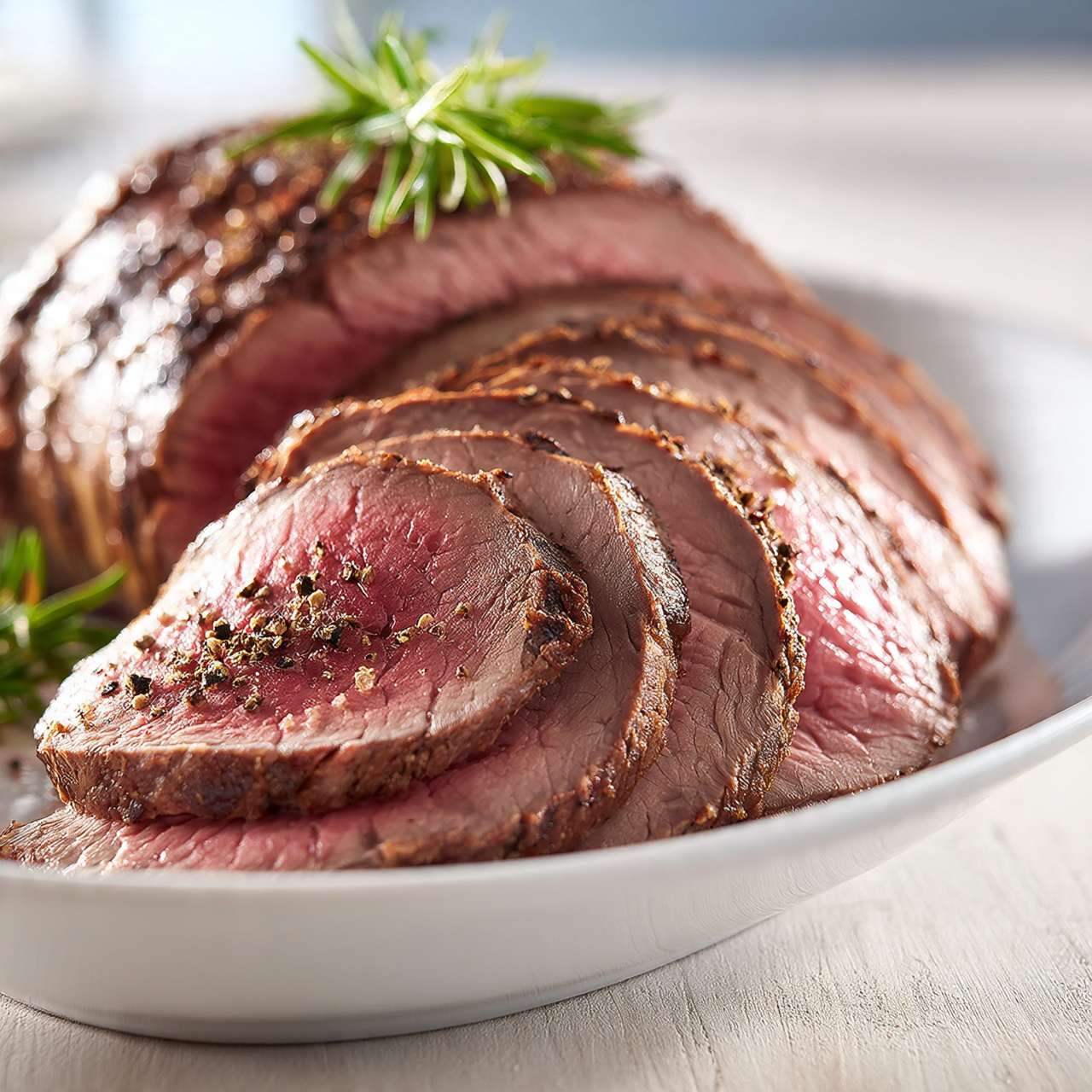
Perfect Roast Beef
Learn how to cook the perfect roast beef with a deeply seasoned crust, tender pink center, and rich pan juices that make every slice absolutely irresistible.

The Roast Beef You Have Always Wanted to Make at Home
There is something deeply satisfying about a perfect roast beef. The kind with a dark, herb-crusted exterior, a blush-pink center that is tender enough to melt against the fork, and a glossy pan jus pooling underneath every slice. It feels like a Sunday centerpiece, a celebration, a meal that says I put in real effort here without requiring any formal culinary training to pull off.
The truth is, knowing how to roast beef perfectly comes down to a few non-negotiable principles: the right cut, a well-seasoned crust, careful temperature control, and patience during the resting phase. Master those four things and you will produce a roast that rivals anything from a good steakhouse.
Before we get cooking, using the right tools genuinely changes the outcome here. A heavy-duty roasting pan ensures even heat distribution, and a reliable instant-read thermometer is the single most important piece of equipment for cooking tender roast meat without guesswork.
Choosing the Best Meat for Roast Beef
The first big decision is your cut, and it matters more than any seasoning blend. Here is how to think about it:
- Ribeye roast is the gold standard. Heavy marbling means maximum flavor and a forgiving margin for error. This is the cut you want for a special occasion.
- Top sirloin roast is leaner, slightly firmer, and still absolutely delicious when cooked to medium-rare. A solid everyday option.
- Eye of round or bottom round are budget-friendly picks that work best with lower temperatures and longer cook times to stay tender.
For this recipe, we are working with a ribeye or top sirloin roast because the best way to cook roast beef at home is to start with a cut that has enough fat and structure to handle high initial heat and a longer finish in the oven.
Chef's Tip: Whatever cut you choose, always buy the roast with the fat cap intact and ask your butcher to tie it if it is not uniform in shape. An evenly shaped roast cooks more predictably from edge to center.
How to Season Beef for Roasting
A great crust is everything. This recipe uses a herb and garlic paste made with rosemary, thyme, smoked paprika, cracked black pepper, and a touch of Dijon mustard. The mustard is optional, but it acts as a binder and adds a subtle tangy depth that you will not be able to identify by name but will absolutely miss if it is absent.
Here is the method:
- Pat the beef completely dry with paper towels before applying the rub. Moisture is the enemy of crust.
- Press the paste firmly into every surface, including the ends and any natural seams in the meat.
- Let it sit at room temperature for at least 45 to 60 minutes before it goes into the oven. A cold roast straight from the fridge will cook unevenly, leaving the outer layers overdone before the center reaches temperature.
Chef's Tip: For even deeper flavor, season the roast the night before and leave it uncovered in the refrigerator overnight. The dry surface will form a light pellicle that crisps up beautifully in the oven.
The Two-Temperature Method for a Perfect Roast
This is the technique that separates a truly great roast beef from an average one. The process is simple:
Start high, finish low.
Blast the roast at 450 degrees F for the first 15 minutes. This creates the deep, caramelized crust through the Maillard reaction, locking in moisture and developing those complex, savory flavors. Then drop the oven to 325 degrees F and let the interior come up to temperature slowly and gently.
The result is a roast with a beautifully seared exterior and a consistently pink, juicy interior from edge to center. This is how to cook a roast beef that impresses every single time.
Use your instant-read thermometer and pull the roast at 135 degrees F for medium-rare. It will climb another 5 to 8 degrees while it rests.
What to Have with Roast Beef
A roast this good deserves equally considered sides. A few of our favorites:
- Creamy horseradish mashed potatoes to soak up all that pan jus
- Roasted root vegetables tossed with olive oil and thyme
- Yorkshire pudding if you want the full classic British spread
- Simple green salad with a sharp red wine vinaigrette to cut through the richness
- Crusty bread for the table, because no drop of that pan jus should go to waste
The pan jus in this recipe is worth making every single time. It takes about five minutes and turns the humble drippings from the bottom of the roasting pan into something genuinely luxurious.
Ready to make it? Here is the full step-by-step recipe:
Perfect Roast Beef
Learn how to cook the perfect roast beef with a deeply seasoned crust, tender pink center, and rich pan juices that make every slice absolutely irresistible.
Ingredients
- 3 lb beef ribeye or sirloin roast, tied with kitchen twine if needed, brought to room temperature
- 2 tbsp olive oil, extra virgin
- 6 garlic cloves, minced or sliced into slivers
- 2 tbsp fresh rosemary, finely chopped
- 1 tbsp fresh thyme, finely chopped
- 2 tsp kosher salt, or more to taste
- 1 tsp black pepper, freshly cracked
- 1 tsp smoked paprika
- 1 tbsp Dijon mustard, optional but adds great depth
- 1 cup beef broth, low sodium, for the roasting pan
- 1 yellow onion, halved, used as a roasting rack
- 2 carrots, roughly chopped, used as a roasting rack
- 2 celery stalks, roughly chopped, used as a roasting rack
- 2 tbsp unsalted butter, for finishing the pan jus
Instruction
Remove the beef roast from the refrigerator at least 45 to 60 minutes before cooking. This step is essential for even cooking throughout the meat.
Preheat your oven to 450 degrees F (230 degrees C). This initial high heat will create a beautiful, flavorful crust on the outside of the roast.
In a small bowl, combine the olive oil, minced garlic, rosemary, thyme, salt, black pepper, smoked paprika, and Dijon mustard. Mix into a thick paste.
Pat the roast completely dry with paper towels. Rub the herb and garlic paste all over the roast, pressing it firmly into every surface.
Scatter the chopped onion, carrots, and celery across the bottom of a roasting pan. These vegetables act as a natural rack and build flavor for your pan jus.
Place the seasoned roast fat-side up on top of the vegetables. Pour the beef broth into the bottom of the pan.
Roast at 450 degrees F (230 degrees C) for 15 minutes to sear and develop the crust, then reduce the oven temperature to 325 degrees F (165 degrees C).
Continue roasting until an instant-read thermometer inserted into the thickest part of the meat reads your desired doneness: 125 degrees F (52 degrees C) for rare, 135 degrees F (57 degrees C) for medium-rare, or 145 degrees F (63 degrees C) for medium. A 3 lb roast at medium-rare typically takes 60 to 75 minutes of total roasting time after reducing the heat.
Transfer the roast to a cutting board and tent it loosely with foil. Let it rest for at least 20 minutes before carving. Do not skip this step.
Meanwhile, strain the pan drippings into a small saucepan. Skim excess fat, then simmer the liquid over medium heat for 3 to 4 minutes. Swirl in the butter and taste for seasoning to create a simple, luxurious pan jus.
Slice the roast against the grain into thin slices and serve with the pan jus drizzled over the top.
Equipment
- Heavy-duty roasting pan
- Instant-read meat thermometer
- Cutting board
- Sharp carving knife
- Small saucepan
- Aluminum foil
- Fine mesh strainer
- Small mixing bowl
Notes
Storing and Reheating Leftovers
Leftover roast beef is one of the great pleasures of cooking this dish. Here is how to handle it well:
- Refrigerator: Store slices in an airtight container with a spoonful of pan jus poured over them to keep the meat moist. Good for up to 4 days.
- Freezer: Wrap tightly in plastic wrap and then foil. Keeps for up to 3 months.
- Reheating: Cover loosely with foil and warm in a 300 degree F oven with a splash of beef broth until just heated through. Avoid the microwave if you can as it toughens the meat.
And do not overlook the next-day sandwich potential here. Thinly sliced cold roast beef on toasted sourdough with horseradish cream and arugula is an entirely valid reason to make this roast in the first place.